Most of us have thought, “Should I quit my job, leave the company, say ‘adios’ to the boss.” Like many impulses, they are fleeting and probably a healthy release.
However, what happens when those thoughts become frequent, and you find yourself spending more and more time either planning your escape or daydreaming about your next move? [Read more…]
 I was particularly intrigued by an article that appeared in the Forbes February 17, 2020, online edition, written by Benjamin Laker, a professor at the Henley Business School in England. The piece is titled “7 Ways to Get the Leadership ‘It’ Factor.” Why was I interested? Because I saw many of my executive clients (and parts of myself) in his descriptions. Several of the observations I encountered are suggestions I often discuss with the leaders I coach.
  I have been thinking about the hiring process these past few months. Many of my executive coaching clients are either trying to hire top-notch employees or are somewhere in the interviewing process for themselves. Both are time consuming and, at times, stressful.
  When speaking with colleagues, prospective clients, and family/friends, they often say, “I don’t need a career strategy, I know where I’m headed.” Or “Who can predict the future, especially regarding work?”
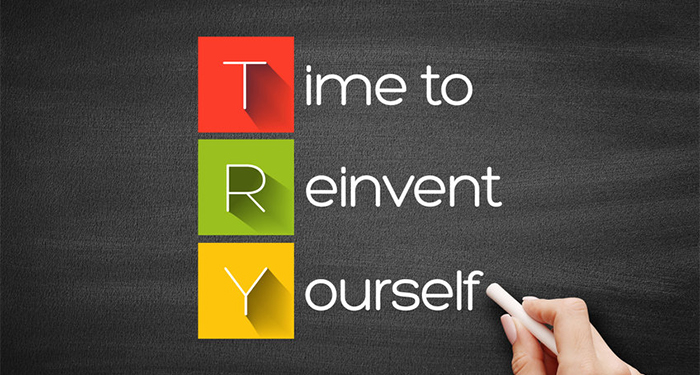 Reinventing yourself can be radical, narrow, and specific, or a small shift with significant impact. It calls for change in ourselves as employees, members of a family, citizen of the world, or as an individual. It requires the awareness something is not working, there is more to life, or our current behavior isn’t authentic. Part of reinvention has to do with how you see yourself and the rest with how others see and react to you. Here are areas you might consider exploring.
  When first studying to become an executive coach, I was curious to hear what leaders in the field were talking about, encouraging, even hawking. The area that rang true for me was the idea of practicing extreme self-care. Simply stated, it is the belief you can’t help others if you aren’t or haven’t taken care of yourself.
  Many of us thought working from home would shield us from the slings and arrows of a toxic work environment. However, research tells us we were wrong.
  One reason people come to executive coaching is to sort out questions, situations, or inner conflicts surrounding their work, job, and career. We put our heads together to zero in on the real issues, think of alternatives, and weigh the risks and benefits, actions, and decisions.
  BJ Fogg is a behavior scientist and the founder and director of the Behavior Design Lab at Stanford University. He is the author of the New York Times bestseller “Tiny Habits: The Small Changes That Change Everything” and Forbes 21 Books to Read In 2021 selection.
  We know all the phrases, “look for the silver lining,” “there are opportunities in a crisis,” and “leaders are born in wars.” There is truth to all of these, maybe even some motivation and solace.