
Why do so many smart leaders become avoidant when it comes to succession planning — anticipating and strategizing potential openings, shifts, new leadership, management, and functional contributor roles within the organization?
Here are some reasons why every organization, team, department, and solopreneurs needs to dedicate time and brainpower to succession planning. [Read more…]
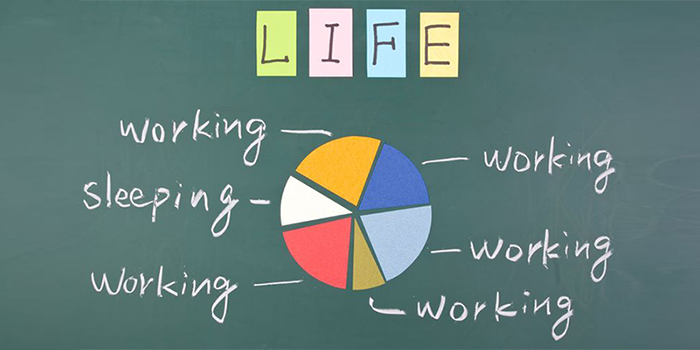 Do you know co-workers who answer e-mails at midnight, return texts at 6 am, and make no distinction between Wednesday and Saturday afternoons? Those individuals who management likes to consider ideal employees. Is it possible you are that person?
 I am the oldest of five children; a great blessing as an adult, a mixed bag as a child. Lessons I learned, being one of many, shaped who I am and how I maneuver through the world. Realizing at an early age I had to be independent, rely on myself, rather than others, made me a decision maker and prepared for the real world. It also anointed me the “doer,” the one to rarely ask for help. I’ve worked hard on correcting the last statement. I’ve learned to ask for help earlier and more frequently.
  Over past decades the issue of diversity has taken a very visible place in the growth and structuring of the workplace population. Whether it was caused by mandates or natural shifts in population, the job sites look quite different.
 I am fortunate to work as an executive coach with people at many levels, in different stages of their careers, and in a variety of industries. Even though there is significant variety and diversity in my client base, I am often struck how similar their thought processes and experiences are. This is particularly true when it comes to discontent. You’d think everyone would be complaining about wages, or lack of
  Everyone wants feedback — my utility company after a service call, the airlines, hotels, Amazon, and Apple. They all are looking for insights on how they can serve me better and looking for any missteps or flaws in their delivery of products and services.
 I am fortunate to coach many very smart, creative, successful people. Yet, when it comes to personal branding and marketing themselves, they act like amateurs. Why is that?
  I was administered my first 360 review as a Senior Manager. I was instructed to hand out forms to my direct reports that would be collected and scored. HR would let me know when the results were in. The day of reckoning came and I found myself in a room of other Senior Managers and the Head of HR. We were given an envelope containing our scores. As we opened our feedback sheets there was dead silence. Some people went pale, others got angry, there were many “whats!!!!,” a few seemed quite content. Everyone then stood up, left the room, and that was the last I ever heard of or discussed my 360 review.
  “Art is theft” is a well-known quote by Pablo Picasso. One might think a genius such as he would have plenty of original ideas and that taking those of another would never be contemplated or necessary. Think again. Reading biographies of artists of his era you hear about the creative and exciting culture of Paris in the 1920s. We all know what they did in influencing the transformation of the world of art and literature, and how the constant interaction amongst these talented artists, and the sharing and stealing of ideas, made each of them better at their craft. Who created something first was never the question — who took it to the next level, or in another direction, received the recognition.
  Successful leaders give much time and thought to the creation and sustainability of their workplace culture. They generally focus on what organizational experts call the cognitive culture — the how we think, our integrity, behavior.